
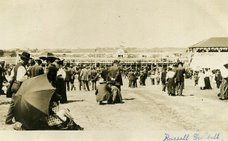
A loyal reader of the Dorchester Times recently emailed us this photograph of the community's original opera house, circa 1905.
And while it may appear to be just a plain, old wooden building to in 2026 -- as you look at this on your computer screen or phone, probably in quiet and by yourself -- this structure served as the heart and soul for much of Dorchester's community culture and social life 121 years ago.
Located on the east side of Main Street (Washington Ave.), north of the present fire hall, the opera house was a multi-purpose venue that hosted everything from theatrical performances and moving picture shows to commencement ceremonies and significant political meetings.
Based on our research, mostly from the Dorchester Centennial History Book published in 1981, the following details are known about the opera house:
- Early Ownership: In the late 1800s, the opera house was owned by R.F. Keep. In May 1900, Keep purchased a piano for the establishment, which was used for various cultural functions.
- Subsequent Owners: By 1909, the venue was owned by Samuel Walker, as shown in the photo above. In 1913, N.L. Curtis purchased the building and reportedly made a number of improvements to the facility.
- Destruction and Rebuilding: The original building was destroyed by fire in 1918, but a new opera house was constructed on the same site shortly thereafter.
Community and Social Functions
Before "moving movie pictures," the Dorchester Opera House hosted a variety of events, including dances, lectures, concerts, minstrel shows, and school programs. It was also a site for Union Gospel Temperance services.
Traveling troupes frequently visited, performing popular plays of the day, such as "Rip Van Winkle" in 1905 with an 18-person cast, or "Old Arkansaw".
DHS' annual commencements and senior class programs were held at the opera house in the early 1900s. During these early graduation activities, senior girls would decorate the stage with colored streamers, plants, and flowers.
On March 28, 1903, a group of 115 farmers met at the opera house to vote on and organize the Dorchester Farmers’ Cooperative Grain and Livestock Association.
After the Dorchester Volunteer Fire Department was organized in 1914, the first "Firemen's Ball" was held in the opera house.
Era of 'Moving Pictures' and Decline
As motion pictures with sound (what we call movies today) became more prominent in the late 1920s and throughout the 1930s, there was a notable shift in the building's role. In fact, by the early 1930s, Dorchester's opera house was used as a pool hall.
During the difficult years of the Great Depression, the opera house continued to provide a welcome relief as community members acted out plays and musicals there to maintain morale.
Despite being used as a pool hall, the venue was still associated with entertainment into the early 1940s. In 1941, the Dorchester Leader advertised "Free Shows" at the opera house. But as the opera house's original function declined, other buildings took over its role as a social center.
The Colonial Theater (located on the west side of Main Street) began hosting movies and dances in the 1930s, and by the late 1940s, the Community Building was established as the primary public gathering place and movie theatre.
Disappearance from Records
The opera house is not included in the business appendices for the periods of 1940–1950 or 1950–1960, suggesting it had ceased to be a recognized business entity by those decades.
Like an aging actor who retires from the stage to take up a quiet trade, the opera house eventually hung up its curtains and faded into the background of the town's changing business landscape.










No comments:
Post a Comment
Village Dweller checks all reader comments to determine if they are appropriate for print.