Showing posts sorted by relevance for query pave. Sort by date Show all posts

Thursday, February 27, 2020

FLASHBACK: How To Pay For Street Paving?


The following post ran in the Dorchester Times 12 years ago. 

In March 2008, America was entering the "Great Recession," Dorchester was preparing to tear down its 1920s school building in order to build the current structure, and Dorchester Times readers were demanding a town vote on whether to expand paved street in our village.

Today, let's take another look at what we were saying a dozen years ago: 


***
Recently, there has been increased chatter from Dorchester residents who want village leaders to seriously consider a plan to pave Dorchester's streets. Last weekend, the nine staff members of the Dorchester Times voted unanimously to support efforts to pave the majority of the town's streets.

With paved streets will come new home construction; more home improvements; increased property value; less damage to vehicles; better air quality; less money spent on gravel and city employee labor; renewed community pride; and a better quality of life in general. 

Supporting paved streets is the easy call. Finding the means to pay for them is a much more difficult task.

We decided to explore the methods of revenue collection used by communities currently paying for new paving projects. We found a variety of approaches.

The City of Lincoln, for example, relies heavily upon "impact fees" that are applied to new homes built in the city's outer limits. Back in 2003, former Lincoln Mayor Don Wesely used a bumpy, dusty gravel road as a backdrop to defend the Capital City's use of the controversial impact fees. Wesely called gravel roads an eyesore and said that an unpaved road is "less safe than a paved road, dusty, a daily problem for the residents ... and the wrong way to build a community."

Smaller communities -- those closer in size to Dorchester -- have similar impact fees. Ceresco has a water and sewer development fee of $2,250 per lot. Malcolm has a tap fee for sewer and water of $250 per lot, plus a sewer and water fee of $2,250 per lot. These fees are used, at least in part, for road improvements.

Of course, Dorchester doesn't have a boom in new home building -- not yet, anyway. Considering that about 75 percent of Dorchester's streets are unpaved, Dorchester would likely need to utilize a bonding program.

Many cities taking on new paving projects have residents vote on a bond issue, typically paid for by an increase in property tax. In the examples the Times found, senior citizens were often exempt from the property tax increase if they are at least 62 years old in the tax year. Most bonding programs also exempt the disabled.

There were some more creative and affordable ways of accomplishing the paving mission. Some communities held special fundraising drives to offset the overall cost. One community even found "sponsors" who donated substantial sums and renamed streets after the largest donors.

We also found one story from rural Washington state in which a small community paved all of its graveled streets thanks to a state grant and donated labor and machinery from a heavy equipment operation school.

The city of Kittitas, Wash. found a team of heavy equipment operators who donated their time, supervision, heavy equipment and the labor in the street paving project. The benefit for the school is that students and others in the program received on-the-job training in an actual project. Washington's state government granted Kittitas $112,644 for paving several streets within the city in the cooperative program. The state funding came from revenue generated by the statewide gas tax, which is similar to Nebraska's gas tax formula. (A portion of Nebraska's gas tax is dedicated to counties and local governments for road projects.)

Regardless of where you stand on the question of whether to pave Dorchester's streets, we can all agree it's hard to envision a wave of new houses or renovations without first seeing concrete trucks in our town. 

Wednesday, September 26, 2018

Renew Dorchester Releases Early Survey Findings


Recently, the Dorchester Times reported on a new group in town called Renew Dorchester.   

Last week, we received a new announcement from the group.  It is published below in its entirety:

----------

Renew Dorchester – a new non-profit – has released early findings from a survey being conducted of its new members.  As a member-driven 501(c)(3) organization, Renew Dorchester’s mission is to enhance the community’s quality of life, while expanding Dorchester’s opportunities.  

Nearly 40 individuals have already joined Renew Dorchester during its first 30 days.  To help the organization identify both long-term and immediate projects, the group is surveying members to shed more light on their key concerns and priorities.  

The following is a summary of early survey responses:


When asked about Dorchester’s current strengths, common responses included:

- There are several young families in and around town who are enthusiastic about Dorchester’s future and are getting involved.

- Dorchester has a growing school enrollment.

- Current businesses are successful, and several organizations (church, volunteer groups, county museum) are currently working hard to improve the community.

- Dorchester is a “friendly community” that is close to larger cities and employers.

When asked about the town’s opportunities, responses included:

- Location affords Dorchester the opportunity to grow its population and business base.

- Dorchester’s strong school allows for even more enrollment growth and more future residents.

- Dorchester’s tightly knit community affords the opportunity for more town events (such as street dances and festivals).

- Dorchester’s lower cost of living and new housing development efforts will attract new residents.

When asked about Dorchester’s weaknesses, responses included:

- More residents need to get involved in organizations and volunteer efforts.

- The appearance and conditions of some homes and commercial properties, including a few on main street, can leave negative impressions.

- Lack of available housing.

- Too few paved streets.

- The attitude of “it has always been this way.”

Renew Dorchester members were then asked for project ideas (or priorities) in five key areas.  The following were common responses in each category:

- “Community Improvement” – Pave more of Dorchester’s streets; develop a plan to pave one street per year; recruit new housing; clean up abandoned properties; offer more kid/family activities.

- “Business Cultivation” – Construct a “spec” commercial building to recruit outside businesses or start-up businesses; find new ways to boost support of existing businesses; encourage construction of new homes; recruit a grocery or convenience store to town; remove/renovate old commercial buildings.

- “Community Involvement” – Offer more community BBQs, street dances and other activities to bring residents together; provide residents an opportunity to help improve main street; provide more activities for younger couples and families; recruit DHS graduates back to Dorchester.

- “Main Street Improvement” – Construct a new community center; create incentives to recruit new businesses and fill vacant buildings; create incentives to improve appearance of Main Street; promote new programs to grow patronage of existing businesses.

-  “Housing” – Find ways to bring new apartment complex/duplexes/multi-family housing to town; remove neglected properties to make room for new homes; enforce housing/property codes more strictly. 

Renew Dorchester’s board is comprised of: Deanna Bird, Brett Boller, Shelly Bruha, Tiernan Creamer, Julie Holly, Jamie Karl, Chris Kirkpatrick, Marvin Kohout, Kyle Lehr, Amanda Nohavec, Cory Schlueter, Daryl Schrunk, and Diane Velder.  Membership to Renew Dorchester is open to all; applications are available in the Dorchester Post Office lobby or by e-mailing RenewDorchester@gmail.com.  

Donations to the organization, including membership dues, are fully tax deductible.  Any and all donations can be sent to RENEW DORCHESTER, P.O. Box 64, Dorchester, NE 68343.

Friday, May 4, 2007

Times' Readers Sound Off

The results are in!

This week, the Dorchester Times conducted its first-ever poll, asking readers: What one thing in Dorchester needs immediate improvement? More than 40 comments were received either on this Web site or at our private e-mail address regarding the April 29 post. Exactly 30 recommendations were submitted by Times readers. (***Note: Our e-mail address has changed to Dorchester.Times@gmail.com)

As promised, here are the results based on the recommendations from our readers. While this poll is very non-scientific, the results will be delivered to City Hall:


"Pave the streets" ......................... 40% (12 responses)

"Downtown makeover" .............. 20% (6 responses)

"Tow junk cars/Clean yards"...... 20% (6 responses)

"Fix water system" ...................... 6.7% (2 responses)

"Hire town cop" ......................... 3.3% (1 response)

"New ball field" .......................... 3.3% (1 response)

"Repair sidewalks" ...................... 3.3% (1 response)

"Fix electricity poles" ................ 3.3% (1 response)

Sunday, August 10, 2025

NEWS ROUND-UP: August Storms, New Street Paving

Dorchester Gets Hammered by Summer Storms: During the early morning hours of Saturday, Aug. 9, the Dorchester area was hit with a storm that packed wind gusts between 80 and 90 mph, sustained for nearly an hour. Extensive tree and structural damage was apparent throughout the community and surrounding countryside. Dorchester was without electricity for about 12 hours on Saturday as temperatures soared near 95 degrees with high humidity. Early Sunday morning, around 1:30 a.m., another round of heavy storms brought around 3.5" of rain, which brought the weekend total to nearly 4.5". In other areas of southeast Nebraska, the Saturday storm left tens of thousands without power, including nearly 70% of Seward County. One person was killed at a state park near Omaha. Read more.

Village Board Sets Stage to OK More Paved Streets: In recent years, Dorchester has seen a significant amount of newly paved streets, primarily the sections around the village park, near the Farmers Cooperative headquarters and grain elevator, and the resurfacing of main street (Washington Ave.). Now it appears the stage is set to pave more of the village's residential section. On July 9, the Village of Dorchester Board of Trustees voted to approve ordinances (2025-02 and 2025-03) to establish street improvement districts. In Nebraska, a street improvement district (or SID) is a special taxing district formed by a city or village. It's a mechanism used to finance public infrastructure projects, primarily the paving or improving of streets, curbs, and gutters within a specific area. According to a public notice -- which was published only on the subscription-based Crete News site, but not the village site -- the new SIDs in Dorchester would ensure the paving of 11 St. from Jefferson to Lincoln Aves., as well as from the state spur to just east of Sumner Ave. The paving will still need to be OK'd by property owners within the SID boundaries, and the village will have the authority to issue bonds to pay for the improvements. The financial burden of the improvements falls on the property owners within the district, not the general public.

New School Year Begins at DPS: Another school year kicks off this Thursday, Aug. 15 at Dorchester Public School. See the school calendar here. Parents and other taxpayers of the district can find information on the school board and administrative staff on the school website. Please note the newsletters have not been updated on the site for some time. 

What's Going On With City Slickers?: City Slickers Bar and Grill -- loved by area residents for more than a dozen years -- has been closed for approximately two weeks, since Aug. 1. And the establishment hasn't been operating on weekends since mid-July. Little information is available regarding the reason. Even employees of the restaurant seem to be out of the loop. City Slickers started in June 2013 under owners, Jason and Kathy Duhrkop, who purchased the establishment from Rob Parks, who had owned and operated Joe's Place since 2009. The bar and restaurant traces its modern-era roots back to 1952, when Joe Ladman bought the building and started Joe's Place, which operated until 2004 when Ladman's son-in-law, Dewayne Schmale, sold the bar to Verna Lewis. From 2004-2006, the bar was known as the Blue Moose. When the bar changed hands again in 2007, under Sheryl Olson, it was known as the West Side Saloon until 2009, when it again became Joe's Place under Parks. It was the Duhrkops who truly transformed the pub into a more traditional sit-down restaurant, which has attracted patrons from a four-county area and brought a tremendous amount of commerce to Dorchester. We at the Times are hopeful that the establishment gets back up and running for the sake of our community and area residents.

Wednesday, May 21, 2014

BREAKING NEWS: Dorchester Residents Want A Vote On Street Paving


The paving issue is not going away.  That is the sentiment reflected in the latest Times' survey of Dorchester residents.

Earlier this month, we asked that only readers who reside in Dorchester's city limits answer our survey regarding support for paving more Dorchester streets.  The request generated some interesting comments, which you can read in the comments section of this story.

Exactly 100 readers responded to the survey.  In fact, there was such an overwhelming response that the host of the survey (Survey Monkey) shut it down at 100 votes -- which is why some of you had an "error" messages when you tried voting.

We asked: Should Dorchester residents be allowed to vote on the issue of paving, either on a block-by-block basis or for the entire village?  Exactly 75% voted yes to voting on street paving, while 25% said that such a vote should not be allowed.  There were no undecideds.


Then we asked: If you could choose between three options on the ballot, which would you choose? A majority -- 50% -- said they would vote to allow petitions for block-by-block street paving, while another 44% said they would vote for bonding to pave all Dorchester streets.  Only 6% said they would vote for bonding to develop new housing with a paved street.  (We were a bit surprised by that result.)


Finally, we asked: Will you vote for Dorchester Village Board candidates who support paving? A decisive 69% said, yes, they will vote for candidates who promise to support street paving, while around 13% said they would not.  Another 19% said they would take several issues into consideration when voting on board candidates.


Friday, October 16, 2015

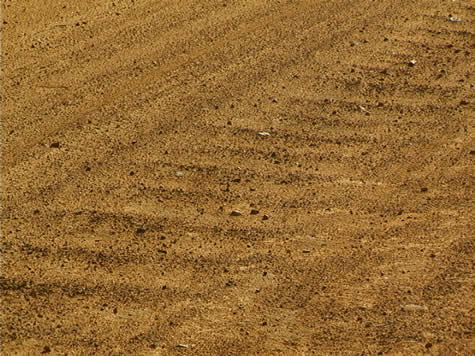
Washboards On 75% Of Dorchester's Gravel Streets


Remember back in August when we reported on the washboards covering most of Dorchester's gravel streets?

Two months later, the problem is even worse.  Were aren't so sure Village Hall is even listening. 

In particular, we've heard several residents upset by the washboards -- or the "thousands of little speed bumps," as one of our neighbors called them -- that have afflicted gravel streets in town.

In August, the Times staff has surveyed Dorchester's gravel streets and we found that nearly 60 percent have washboards.

As of today, our count shows that more than 75% of the gravel streets have them.  To our knowledge, the village employees have not yet tried to address the situation.

Washboards make driving on your street uncomfortable, on top of causing damage to your vehicle. It can torture your suspension system, increase your maintenance costs, and make carrying tools or other materials in the bed of your truck nearly impossible. And if you're towing anything behind your vehicle, you better hope it can handle the extra strain.

When it comes down to it, a city government's top priorities are streets, water and sewer, and electricity.  Everything else is way down the priority list.

We aren't sure how washboards form -- and why they get worse.  (It appears speeds over 20 miles per hour play a large role in their formation.) But it's clear there has been some neglect in working to remove these public nuisances in Dorchester.  

While the village applied a boatload of new gravel to the streets in early spring, the foundation was untouched -- now drivers are paying the price.  On some streets, we've seen drivers opt to drive on the grass instead of taking the gravel washboards.  

That's just not right.

It appears there is absolutely no push to pave more Dorchester streets.  At the very least, driving on our gravel streets should not be a completely miserable experience for residents or their vehicles.

Monday, February 11, 2019

Renew Dorchester Announces Essay Contest Winners


The following is a news release sent to the Times by Renew Dorchester.  We are publishing it in its entirity.

***

Renew Dorchester – a new, non-profit charity organization – has announced the winners of its student essay contest.

The “Vision 2030” essay contest asked Dorchester Public School students (grades 3-12) for ideas on how Dorchester could improve and grow during the next dozen years, by the year 2030.  According to Renew Dorchester officials, the group received many good ideas, especially from the elementary classes, which had near 100% participation.

The contest was divided into three divisions, each with its own minimum-length requirement and cash awards.  Below are the winners as determined by a panel of judges.  (Names on the essays were covered to ensure impartiality.)

Grades 3, 4 and 5
1st place -- Blake Cerny ($75)
2nd place -- Hadley Brandt ($50)
3rd place -- Livia Schweitzer ($25)

Grades 6, 7 and 8
1st place -- Baylor Behrens ($100)
2nd place (tie) -- Andrea Pavlish ($25)
                                      Hailey Schweitzer ($25)
3rd place -- Atley Zoubek ($25)

Grades 9, 10, 11 and 12
1st place -- Alli Novak ($200)
2nd place -- Kyra Creamer ($50)
3rd place -- Ben Nohavec ($25)

The winning essays were formally announced to the Dorchester Public School student body at a Feb. 6 pep rally held in the school gymnasium.  Renew Dorchester Secretary/Treasurer Deanna Bird, along with Renew Dorchester board member and Dorchester Superintendent Daryl Schrunk, presented the cash awards.

Renew Dorchester is a member-driven, 501(c)(3) organization with a mission to enhance the community’s quality of life, while expanding Dorchester’s opportunities for the future – including its main street and housing.  Renew Dorchester is an affiliate of the Nebraska Main Street Network.  

Membership to Renew Dorchester is open to all individuals who care about the village and its future.  Applications are available by e-mailing RenewDorchester@gmail.com, or calling 402-418-1021.  All donations, including membership dues, are fully tax deductible.

###

Below are excerpts from the winning essays.

  
Grades 3-5

1st place -- Blake Cerny

“First, I think we need to pave all roads in our village.  This way everyone can have the same advantage of nice road, not just some people. … Second, I would like to see a grocery store (so) we don’t have to drive to Crete or Lincoln to buy our food.  Last, I feel we need to build newer homes.  Most of the homes in Dorchester are 100 years old and need upgrades.  This is not the 1990s anymore.  But I don’t want us to grow as big as Lincoln.  I like Dorchester being a small community.”

2nd place -- Hadley Brandt

“I want people to clean up their yards so they look nice and more people want to move here. … We need a website to give people all over town information about houses that are for sale and other things that are happening.  Technology is growing quickly, so the town needs to grow with the technology.”

3rd place -- Livia Schweitzer

“One of my favorite things about Dorchester is that it is very calm and peaceful.  Dorchester has lots of friendly people.  I think that it is cool that when I pass someone I can smile and say “hi” and know they will say “hi” back.  … By the year 2030, I think we can add paved roads.  One of those roads could lead to a drive-in theater.  There could be a bowling alley, a gym for training, (and) a place with free wi-fi that served milkshakes.”

Grades 6-8

1st place -- Baylor Behrens

By the year 2030, it would be marvelous to see some more entrepreneurs settle and start more businesses. … Since I was very young, I have dreamt of towns that have every house up-to-date and filled with pleasant people greeting you as you pass by.  I speculate that Dorchester will be the first town to achieve this … Dorchester will become a very well-known town.  … Digital advertising is just one way to spread the word.”

2nd place (tie) -- Andrea Pavlish

“Most kids can only dream of living in a place like Dorchester.  The future splash pad, affable people and a remarkable school. … In 12 years, I will be 23 years old.  (By then), I could be observing construction of an apartment building in Dorchester.  Dorchester has this small-town spark that keeps us going and makes us want to improve every single day.  … 2030 will be a year that will see more buildings built and streets paved, with a new sign that says: “Dorchester, population 1,000.”  To get there, you need attractions.”

 2nd place (tie) -- Hailey Schweitzer

“What other students and I can do right now to improve Dorchester is participate in school sports and show Longhorn Pride.  We can show other communities that Dorchester is a great place to live by respecting their property when we visit other towns.  We can also keep our town looking nice by participating and organizing community clean-ups.  The community residents should all participate in town events such as the Fourth of July celebration.  Young community members can watch how the more experienced members run and support community services.  Dorchester’s FBLA are great community leaders to look up to.”

3rd place -- Atley Zoubek

“I’ve lived in Dorchester my whole life and absolutely love it! If we can get more houses built, or even fixed up, I see our town growing with great people who others can trust.  … In the future, I hope to see Dorchester get a bakery, grocery store, and maybe even a bowling alley. … We need to use technology better to promote events and get the word out more efficiently to help more people get involved in our community.  We can also promote our businesses more.”


Grades 9-12

1st place -- Alli Novak

“I hope that by 2030, Dorchester will have paved streets throughout the town, a grocery store, and maybe a truck stop. … Since Dorchester is near two major highways, a truck stop would attract people to our beautiful town. … One way for students to help improve Dorchester right now is by fixing up some of the broken-down buildings, like the old telephone office, the building next to the bank, and the building catty-corner to Donna’s Hair Creations.  The students could fix them up to what they looked like before.  This way they would become tourist attractions.”

2nd place -- Kyra Creamer

“If we were able to get rid of abandoned, old houses and replace them with new homes and improved the surrounding land, this could definitely increase Dorchester’s population.  … By expanding our community, our student population would grow, also, meaning new opportunities for the town and the school.  … What students like me and others can do now to improve Dorchester is participating in community service.  Simply helping out others can make a positive impact on the community as a whole.”

3rd place -- Ben Nohavec

“There are three things I hope to see in Dorchester in 12 years – a finished splash pad, more stores and shops, and paved streets. … To fill the commercial buildings on main street, it doesn’t have to be a grocery store necessarily.  A new store could be a high-tech shop that allows kids to experiment with technology that they didn’t even realized existed. That would also bring more people to Dorchester.”

Tuesday, January 20, 2015

Ideas To Pay For Dorchester's Street Paving


Dorchester has a lot going on right now, but there's still a large number of Dorchester residents who want village leaders to act on a plan to pave Dorchester's streets -- even if it's only a limited paving strategy.

Critics of such a plan will resort to their traditional response: How do you propose we pay for such an undertaking?  After all, Dorchester is trying to pay for water improvements, drainage projects and other endeavors.

But we still believe that with newly paved streets (in certain areas -- not every street) will come new home construction, more home improvements, increased property value, less damage to vehicles, better air quality, less money spent on gravel and labor, a renewal of community pride, and a better quality of life in general. 

So we decided to explore the methods of revenue collection used by other communities currently paying for new paving projects. We found a variety of approaches.
  • IMPACT FEES ON BLIGHTED PROPERTIES: The City of Lincoln, for example, relies heavily upon "impact fees" that are applied to new homes built in the city's outer limits. One member of the Times staff suggested "impact fees" on condemned properties (commercial and residential), abandoned homes, blighted buildings, and properties whose owners won't obey the village's clean-up orders.  Not a bad idea, we think.
  • NEW FEES ON SEWER/WATER HOOK-UPS: Smaller communities with populations more similar to Dorchester also impose impact fees. Ceresco has a water and sewer development fee of $2,250 per lot. Malcolm has a tap fee for sewer and water of $250 per lot, plus a sewer and water fee of $2,250 per lot. These fees are used, at least in part, for road improvements.
  • BONDING:  Since Dorchester doesn't have a boom in new home building -- not yet, anyway -- the village would likely need to utilize a bonding program.  Many communities that take on new paving projects have residents vote on a bond issue, typically paid for by an increase in property tax -- which is never too popular.
  • LOCAL OPTION SALES TAX:  Dorchester could impose up to a 2-cent sales tax on goods sold in the confines of the village, with the revenue being dedicated to paving. Such a tax would need to get voter approval first under the state's LB840 program.
  • GET CREATIVE:  There are some more creative and affordable ways of accomplishing the paving mission. Some communities hold special fundraising drives to offset the overall cost. One community even found "sponsors" who donated substantial sums and renamed streets after the largest donors.  In Washington state, one small community recently paved all of its streets thanks to a donated labor and machinery from a heavy equipment operation school.

Wednesday, August 5, 2015

Dorchester: Here Is How To Get Paved Streets -- If You Want Them


In recent years, support for paving more Dorchester streets has grown. Supporters say that to grow Dorchester and encourage more people to build here and improve their homes, paved streets are a key.

As reported earlier by this blog, the power to pave is in the hands of Dorchester residents -- or at least those who own property in village limits.  
Nebraska law, Section 17-510, says a petition can be started by those who have property next to an unimproved street (meaning gravel or dirt).  

Now a loyal Dorchester Times reader has e-mailed us a document that will allow Dorchester residents accomplish their paving mission, if they so desire.

The power to get more paved streets is in your hands, and here is how you do it:

1.)  Use this petition sheet (click here) and determine what area you want paved.  You will note that the petition sheet has blanks for street names.  It is up to the petitioner(s) to determine their "paving district." It might be just one block of a single street, or it might be several blocks.  The smaller the paving district, the better chances of paving occurring, most likely.

2.)  Get the signatures of enough landowners -- representing at least 61% of the front footage of the property directly abutting the street proposed to be paved.  This means you will have to ask property owners (not renters) to sign your petition sheet.

3.)  Present the signed petition to the village board at their monthly meeting.  Call the clerk's office ahead of time to get on the agenda.  Unless the board can find a technical reason to deny the petition, they will need to proceed and levy special assessments on the land abutting or adjacent to the paved street to finance the work.  Special assessments for such projects can be paid over a 15-year period, according to state law, we are told.

The Times staff is not comprised of attorneys or development specialists.  However, we have received this information from residents of town who say they've worked with experts who have experience in establishing street paving districts.


After years of hearing complaints about a lack of paved streets in Dorchester, the Times is happy to help provide this assistance to residents and empower them to pursue paved streets, if this is what they want.

Wednesday, October 9, 2024

NEWS ROUND-UP: Dorchester's Autumn Street Paving Projects

Dorchester's Autumn Street Paving Projects: Dorchester continues to add more concrete streets, as crews work to pave sections of Franklin Ave. and 8th Street that border the city park. Approved the the village board, the project will ensure paved streets surround the park, with the exception of the alley to the east. Meanwhile, Dorchester's main street, Washington Ave., is being resurfaced for the first time in more than 30 years. According to our records, the street was last resurfaced in the fall of 1991, or 33 years ago. In recent years, the street had become quite rough due to holes and cracks in the surface, especially as more semi-truck and trailer traffic utilizes the roadway.

Community Fall Clean-Up Begins Saturday: Dorchester's Community Fall Clean-Up will be from Saturday, Oct. 12 through Monday, Oct. 19. The dump site will be open Monday thru Friday 3-7 p.m. and Saturday 9 a.m. to 5 p.m. 

DHS Football Scores First Victory of 2024: The Dorchester football team picked up its first win of the 2024 campaign on Sept. 27, beating Harvard 58-12. The Longhorns, now 1-4, on the season, will take on Diller-Odell (4-1) this Friday, Oct. 11, in a contest at Nerud Field.

DHS Volleyball Team Hits Rough Patch: This blog may have jinxed the DHS volleyball team when we wrote on Sept. 24 that the Orange and Black Attack deserved to be in the Class D-2 top ten. Since defeating No. 8 Osceola, Dorchester has dropped five of its last nine contests. The Lady Longhorns now stand at 14-7 on the season. Next up for DHS is Cross County (13-11) in a Thursday road game (Oct. 10) and a home contest against Lincoln Parkview Christian ( 0-18) on Monday, Oct. 14.     
Missing Lincoln Woman Found in Dorchester: A woman who went missing from her home in southwest Lincoln was found in Dorchester, according to media reports. Charlotte Starkey, 75, had been missing since Sunday, according to the Lincoln Police Department. Police said her husband returned to their house near 16th and Burnham streets at about 2:30 p.m. and couldn’t find her. Around 6 a.m. Tuesday, LPD said Starkey was found “safe, healthy, and in good spirits.”

EPA Offers Recreation Grants: The U.S. EPA's Recreation Economy for Rural Communities program is accepting applications through Oct. 16. The program provides planning assistance to small towns and rural communities to help them boost their outdoor recreation economy and revitalize their main streets. Past projects have included promoting outdoor-oriented businesses and supporting economic growth and amenities in downtowns. Learn more.

Sunday, January 11, 2015

Ten Reasons To Put Paving On The Ballot


Since we published a top 10 list yesterday, we thought we would add one more for the weekend.

More than 35 years ago, the Dorchester Village Board decided to abandon its attempt to not pave all of the community's streets.  

Much has changed since 1979 -- and so have many of the people.  The residents of Dorchester 2015 deserve to have their voices heard on the issue of street paving.

The Times supports paving some of Dorchester's streets, those that are most traveled or hold potential for new housing development.  But since this blog was create in 2007, the Dorchester Village Board has not permitted the town's resident from voting on the street paving issue.

Once again we urge the village board to let the residents of Dorchester decide on paving. Now is the time.


Ten Reasons to Let the Voters Decide on Paving

  1. Isn't 35 years of wondering where the people stand enough?
  2. Paved streets would greatly improve Dorchester's overall quality of life.
  3. Paved streets would likely bring new and improved housing to town -- and increased property tax revenue for city hall and the school district.
  4. Paving would appeal to out-of-towners and rural residents considering a move to Dorchester.
  5. Paving would save money in the long term. Since 1979, the Village of Dorchester has spent roughly $2.2 million on upkeep of gravel streets (not including pay of village employees to do the work).
  6. Paved streets would help encourage more baby boomers to spend their retirement years here -- and encourage more young people to stay.
  7. Paved streets mean less damage to vehicles.
  8. Paved streets allow for healthier air quality.
  9. Paved streets will spark a renewal of community pride.
  10. A vote would finally put the paving matter to rest, one way or the other.

Wednesday, November 14, 2007

More Than 67% Of Readers Want To Vote On Paving

According to an online poll conducted by the Dorchester Times, more than two-thirds of readers want to vote whether the village should pave the remainder of its streets. Approximately 70 percent of Dorchester streets are presently graveled.

The Times poll -- conducted Nov. 1-14 -- showed that 67.2 percent wanted to see the paving issue on the town ballot. Another 32.8 said they would prefer the issue not make its way to the polls. The poll surveyed 131 readers.

The Times has covered the paving discussion at length. Back in May, one of our reader uncovered two news articles from the summer of 1979, when the Lincoln Star covered Dorchester's paving debate.

Both articles are still available via our Web site. (Click here for article 1 and here for article 2.)

To date, the Dorchester Times has not taken a stance either for or against any town paving project. However, we continue to encourage Times readers to share their thoughts on this site, as well as with village board members.

Thursday, May 6, 2021

Looking Back: Dorchester's Great Paving Debate Of 1979


Nothing generates as much hardened controversy in Dorchester as the question of whether to pave the streets. Years ago, the staff of the Dorchester Times discovered that firsthand. 

In 2007, one reader told us that he lived through the last "paving push" and saw it nearly tear apart the town. He added: "I hope before you drag this issue through the mud that you have done your homework. You seem to be a big pusher of improvement, but not once have I heard how to pay for it. ... It might pay for you to personally do some homework on costs before you push things. ... Learn from history."

With a challenge like that, the Times uncovered news articles from the summer of 1979, when the Lincoln Star covered Dorchester's great paving debate. Today, we are republishing one of those articles below. (The other is available here.)

The passage of time has a strange way of shedding light on matters, making it easier for new generations to see things more clearly and allowing them to chose the best way forward. What was decided more than four decades ago may not be right for today or the future. Therefore, it's worth sharing these articles, especially with those too young to remember. 

Now, let's revisit 1979 and the discussion that embroiled our community...

Lincoln Journal - July 3, 1979

Paving is Hot Topic in Dorchester

DORCHESTER – What, in a town of 630 on a warm summer’s evening, does it take to get 120 people to a village board meeting? Paving.

That was about the only thing decided here Monday night as folks got together to discuss the only topic in town hotter than the temperature inside the community center.

With the group apparently split about 2-to-1 against paving, emotions soared during the two-hour session. Yet, almost like a family spat, nobody was called anything worse than his first name – which happened repeatedly.

Technically the session was called for the routine creation of three districts involving only four blocks of paving. But most of the argument centered on the “gap paving” that Mayor Bill Moser says they board probably will order in later.

The mayor says even the gap total probably will not exceed four or five blocks, but opponents fear it will eventually checkerboard most of the town. They contend numerous older people as well as young home owners will lose their properties if the paved segments are put in.

“I lived on a farm and walked in both dirt and manure and it didn’t hurt me,” said Belva Johnson, cafe owner and outspoken opponent of the $21-per-front-foot paving. “If it wasn’t for dirt, how many farmers could have come to town and retired?”

That was one of several comments drawing applause. But so did a remark by proponent and retired farmer Hans Weber that “dirt streets don’t bring people into town.” Paving is “good for the town,” he continued. "Name me one little town around here that doesn’t have paving.”

Several others echoed Weber’s sentiments, saying it should be within their rights to have paving if desired. Approximately 30 to 40 persons stood up when asked how many persons present favor surfacing.

Two young wives, Cindy Meyers and Sally Danekas, said their families would not have moved to Dorchester had they known paving – which would be the town’s first since the 1930s – would be contemplated.

This brought a retort from businessman Dick Sehnert who asked, “Where exactly would you have moved? There’s paving in Friend and Wilber and Crete, too...”

Attorney Merritt James of Lincoln, representing the Walton Construction Co., which has the paving contract, said the firm had been “unfairly chastised” by published remarks critical of the firm’s work. Both Mrs. Johnson and Sidy Bruha said they had received requests by letter but refused to change their opinion.

“The company feels that never in 40 years of doing business has it been so unfairly attacked,” continued James. He insisted that the complaints actually derived from job specifications to which the contractor is complying.

The board unanimously approved two of the three small districts, both created by at least the 60 percent of affected property owners required by law. Because of a legal description error, the third district will have to be re-advertised.

Sunday, August 5, 2012

Our Perspective: The 3 Keys To Happiness In Dorchester


Life in Dorchester is good.  Don't believe us? Consider the following:
  • Unlike many others, we're earning more than ever before.  In the past 10 years, Dorchester's estimated median household income has risen to more than $41,100, compared to $34,000 in 2000.
  • Unlike other areas in the U.S., our home values are rising.  Dorchester's estimated median house value today is $95,750; it was $60,200 in 2000.
  • Cost of living here is among the lowest in the country.
  • In the areas of property crime and violent crime, Dorchester's rates are about one-third the average rates for Nebraska.
But statistics don't matter much when we are down on our friends, neighbors and community.  To enjoy life, we all need some encouragement. We must avoid the pitfalls that lead to unhappiness as members of a community -- any community.

In general, three key pitfalls to avoid are:

1.)  The desire to change other people.  When last did you want to change your own family members? Did it work? For most of us, it did not. So why try to overhaul your neighbor or fellow citizens? The truth is, no matter how hard we try to change another, it’s likely not going to work. Instead, talk to your neighbors and fellow community residents.  Listen.  Understand their hopes and dreams.  Convince them to be part of making their community a better place.

2.)  Impatience. It’s very frustrating when things are not going the way we want them to.  Some of our staff members have been trying to pave Dorchester's streets for years. We have learned to wait, wait and wait. That doesn't mean giving up on our hopes for a better future.  But the good book tells us to "be satisfied with what you have."  That's the ultimate path to happiness.

3.)  Jealousy.  This is a very destructive and devastating emotion, perhaps worse than any other human quality. It will destroy relationships and communities -- even nations.  We must learn to get rid of it as soon as possible and overcome it by believing in causes bigger than ourselves.